
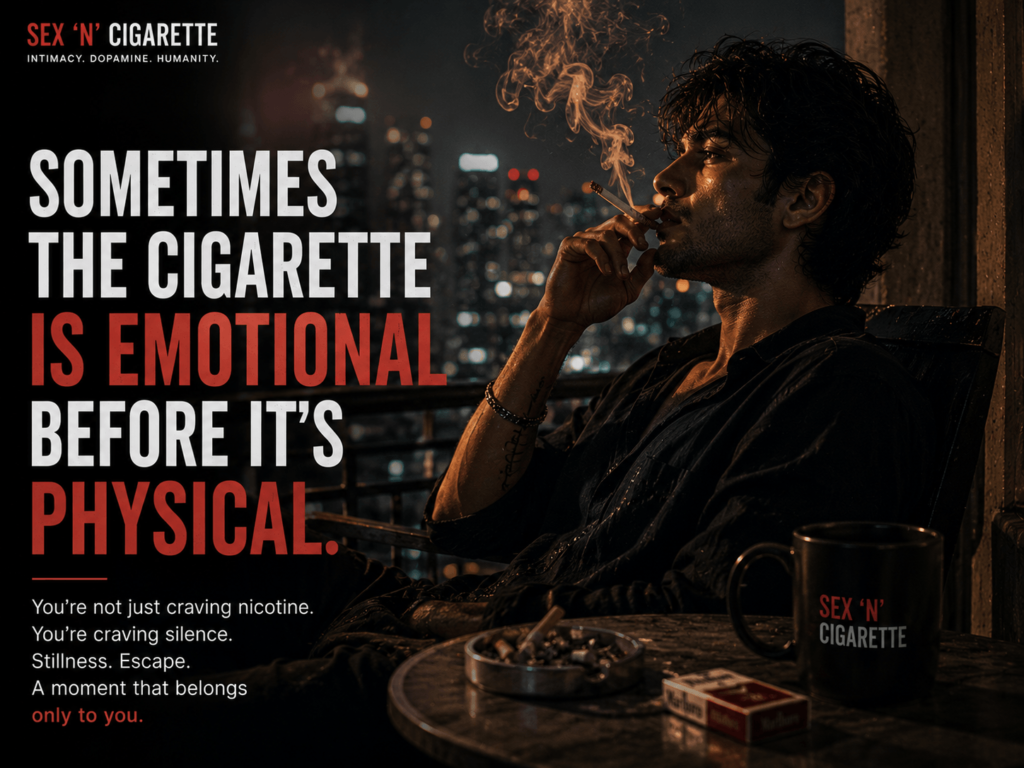
Modern smoking is rarely just about nicotine anymore.
For many people, the cigarette quietly became something emotional long before it became physical. A pause between overstimulation. A ritual after emotional chaos. A moment of silence inside lives that never stop demanding attention. And perhaps that’s why some people don’t only crave cigarettes during stress, they crave them during emotional overload, loneliness, heartbreak, sexual tension, uncertainty, or those strange late-night hours when the mind refuses to slow down no matter how exhausted the body feels.
The cigarette became emotional punctuation.
That’s partly why smoking still carries such psychologically seductive energy in cinema, relationships, and modern culture despite society openly condemning it more aggressively now. A cigarette in films is rarely only a cigarette. It becomes emotional atmosphere. Emotional rebellion. Controlled self-destruction. Seduction. Distance. Mystery. Sometimes intimacy itself. Entire generations emotionally absorbed these associations long before they ever consciously understood them.
And honestly, modern life almost seems designed to create the exact emotional conditions cigarettes psychologically thrive inside.
Constant notifications.
Constant visibility.
Constant pressure to perform.
Constant emotional stimulation.
Dating apps. Social media. Hustle culture. Emotional uncertainty. Dopamine overload.
The nervous system never fully relaxes anymore.
So people unconsciously search for rituals that force emotional interruption. A balcony cigarette. A drive at night. Smoking outside a party alone for five minutes just to escape people temporarily. Even people trying to quit often admit they miss the emotional ritual more than the nicotine itself. The silence. The slowness. The permission to briefly disappear from emotional pressure without needing to explain themselves.
That emotional relationship becomes deeply addictive. Especially for emotionally intense people.
Because some people are not only smoking to feel pleasure. They’re smoking to regulate emotional overstimulation their nervous system no longer knows how to process naturally anymore. A cigarette becomes controlled stillness. Predictable calm. Familiar emotional pacing in lives where everything else feels psychologically chaotic.
And perhaps that’s why smoking culture became strangely tied to attraction too.
There’s something emotionally intimate about shared silence. Two people smoking on a balcony after sex. Passing a lighter back and forth during emotionally vulnerable conversations. Looking at city lights together while neither person fully explains what they’re feeling underneath the moment. Cinema understood this emotional tension beautifully. Old-school romance films, noir aesthetics, even modern fashion photography still quietly frame smoking as emotionally seductive because cigarettes visually slow human interaction down.
The danger, of course, is when emotional ritual slowly becomes emotional dependency.
Many smokers eventually realize they’re not reaching for cigarettes only during pleasure anymore. They reach for them during emotional discomfort automatically. Stress. Loneliness. Rejection. Anxiety. Emotional emptiness. The nervous system begins outsourcing emotional regulation to ritualized nicotine patterns instead of developing healthier emotional grounding internally.
And modern loneliness intensifies this cycle even further.
Because many people are emotionally exhausted, touch-starved, intimacy-starved, overstimulated, under-rested, and psychologically disconnected from themselves in ways society rarely discusses honestly enough. Sometimes the cigarette becomes less about addiction and more about emotional companionship — a predictable ritual waiting quietly during moments people feel emotionally abandoned by everything else around them.
But perhaps awareness changes something important here.
Because underneath many smoking habits is often a very human emotional need:
slowness
stillness
release
presence
escape from overstimulation
emotional quiet
And maybe healing doesn’t begin by aggressively shaming people for coping imperfectly. Maybe healing begins by understanding what emotional void the ritual was trying to fill in the first place. Because sometimes people are not actually addicted only to nicotine. Sometimes they’re addicted to finally feeling mentally still for a few fragile minutes in a world that no longer knows how to slow down.
If this article resonated with you, explore more conversations around dopamine culture, emotional intimacy, attraction psychology, smoking culture, and modern human behaviour at Sex ‘N’ Cigarette.
Because sometimes the habit is emotional long before it becomes physical.
Also Read: