
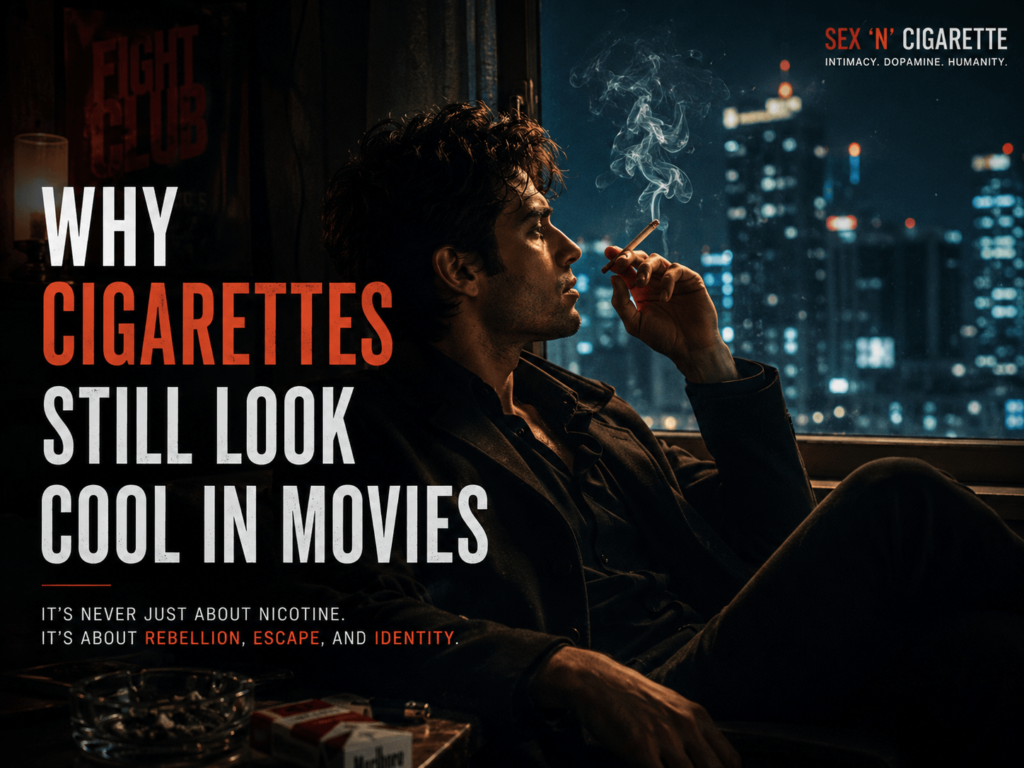
It’s strange how certain images survive culture long after society officially rejects them. Cigarettes have made it possible as smoking is one of them.
Modern audiences are fully aware cigarettes damage health. Entire campaigns, warnings, documentaries, and regulations have spent years making sure people understand the consequences clearly. And yet somehow, cinema still finds ways to make smoking feel emotionally powerful on screen.
Not necessarily healthy, but emotionally symbolic.
A cigarette in films is rarely just nicotine. It usually represents something psychologically larger underneath the surface — rebellion, emotional detachment, seduction, loneliness, masculinity, femininity, chaos, confidence, exhaustion, mystery, or emotional escape. That’s partly why smoking scenes continue feeling visually memorable even in an era where fewer people openly defend smoking itself anymore.
Cinema understands emotional symbolism better than most modern internet culture does.
James Dean leaning against uncertainty. Johnny Depp carrying emotional rebellion like second skin. Old Bollywood heroes smoking through heartbreak. Even characters in shows like Peaky Blinders rarely smoke because they are happy. They smoke because the cigarette visually communicates emotional tension words cannot fully express. The silence between drags becomes part of the character’s psychology.
And audiences emotionally absorb that symbolism almost unconsciously.
Part of what makes smoking still appear “cool” on screen is actually connected to pacing. Cigarettes slow scenes down. In modern media filled with overstimulation, fast edits, noise, and algorithmic chaos, smoking scenes create temporary stillness. A pause. A moment where the character exists emotionally with themselves instead of constantly performing for the world around them.
That emotional pause feels psychologically attractive to exhausted modern audiences, especially now.
Modern life rarely allows people to slow down emotionally anymore. Everyone is constantly reachable, visible, distracted, stimulated, optimized, and emotionally overloaded. And perhaps that’s why cinematic smoking still resonates visually, not because people necessarily want lung damage, but because they crave the emotional atmosphere smoking scenes often symbolize.
Stillness. Escape. Emotional detachment. Quiet rebellion.
Even sexuality became tied to smoking culture historically because cigarettes were often framed as emotionally intimate objects in cinema. Shared lighters. Balcony conversations. Post-sex smoking. Emotional tension sitting quietly between two people without constant conversation. Directors understood the psychological power of silence long before modern dating culture became addicted to endless texting and instant emotional availability.
But there’s also something dangerous hidden underneath this aestheticization.
Because emotionally struggling people often mistake symbolic coping for actual healing.
A cigarette may look emotionally powerful in cinema because it visually represents emotional unrest beautifully. But in real life, many smokers quietly discover that the ritual they once associated with freedom slowly becomes dependency instead. What once looked rebellious eventually becomes automatic. Emotional escape slowly transforms into emotional reliance.
And yet completely demonizing smokers emotionally also misses something important about human behavior.
Many people don’t smoke because they’re ignorant. They smoke because modern life itself often feels psychologically exhausting. The cigarette becomes ritualized relief. A break from emotional pressure. A socially accepted pause button. Sometimes even an identity marker people emotionally attach themselves to.
That doesn’t make smoking healthy.
But understanding the emotional psychology behind it creates more compassion than simple judgment ever could.
Perhaps that’s the deeper reason smoking continues surviving culturally even while society publicly rejects it more aggressively now. Cigarettes became emotionally symbolic long before they became politically controversial. And emotional symbolism rarely disappears completely just because culture changes its official opinion.
But maybe modern people are also beginning to search for healthier versions of what smoking scenes emotionally represented all along.
Slowness. Presence. Stillness. Reflection. Human connection. Emotional release.
Not necessarily the cigarette itself.
Just the feeling people once believed it gave them.
If this article resonated with you, explore more insights on smoking psychology, modern culture, emotional behavior, intimacy, and dopamine patterns at Sex ‘N’ Cigarette.
Because many modern habits are emotionally symbolic long before they become behavioural.
Also Read: