
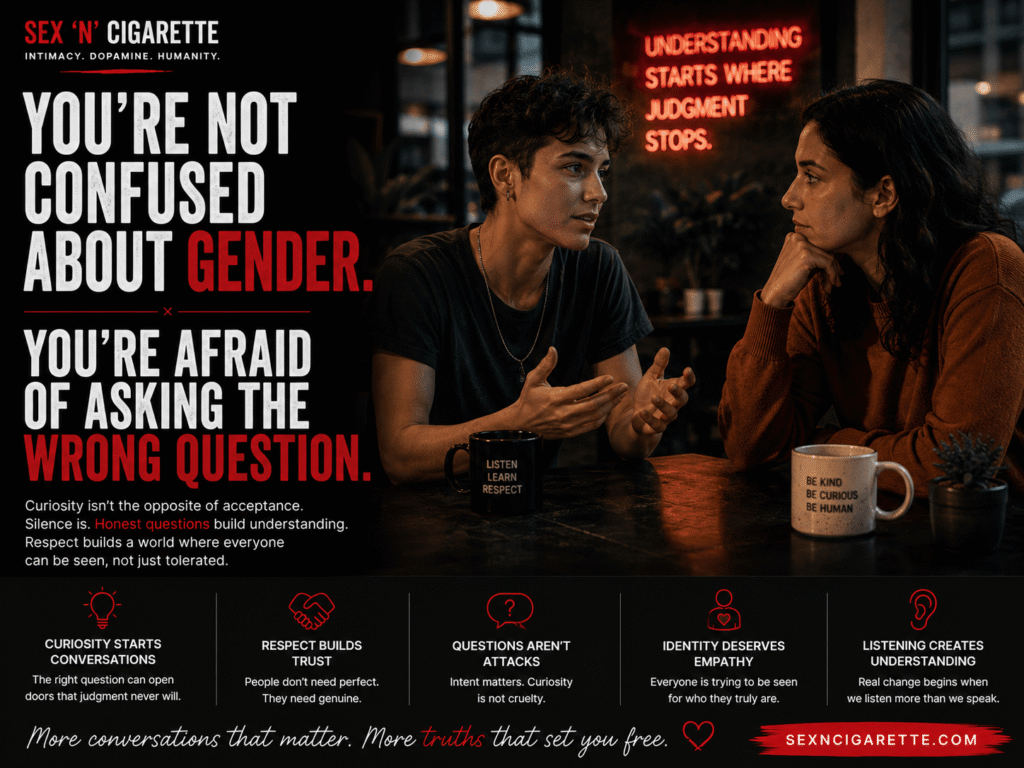
A few months ago, a friend lowered his voice before asking me something that millions of people quietly wonder. “I don’t want anyone to think I’m disrespectful,” he said. “I genuinely want to understand… but I’m scared that if I ask the wrong question about gender reality, someone will think I’m a bad person.”
That sentence stayed with me long after the conversation ended. Not because of the question he eventually asked, but because of the fear that came before it. Somewhere along the way, curiosity became confused with hostility. People who genuinely want to understand gender, identity, pronouns, or lived experiences often hesitate—not because they don’t care, but because they care enough to worry about getting it wrong. And when honest curiosity disappears, misunderstanding quietly takes its place.
The reality is that gender has become one of the most emotionally charged conversations of our generation. For some people, it’s deeply personal because it reflects who they are. For others, it’s confusing because the language has evolved faster than they expected. Neither experience automatically makes someone hateful or enlightened. It simply makes them human. The healthiest conversations don’t begin with everyone already agreeing. They begin with people being willing to listen before they rush to judge.
One of the biggest misconceptions is that asking respectful questions is offensive by itself. In reality, context matters. There’s a world of difference between asking, “Can you help me understand?” and asking a question designed to mock someone. Curiosity invites connection. Contempt destroys it. Most people can feel the difference within seconds. That’s true whether you’re discussing gender, sexuality, religion, politics, or relationships.
What’s fascinating is that gender conversations often mirror relationship conversations. In both cases, people don’t simply want to be tolerated. They want to be understood. We all carry an internal story about who we are, how we wish to be seen, and what makes us feel respected. For one person, that story may involve masculinity. For another, femininity. For another, being transgender, non-binary, or somewhere else on the spectrum. The details differ, but the emotional need is remarkably similar. Every human being wants to feel that the world sees them as they see themselves.
That doesn’t mean every conversation will be easy. It won’t. There will be disagreements. There will be moments when people accidentally use the wrong word or misunderstand a new concept. That’s part of learning. Progress has rarely been built by pretending confusion doesn’t exist. It has almost always been built by replacing fear with conversation. A culture that leaves no room for honest questions eventually leaves no room for honest understanding either.
Perhaps that’s why the phrase “gender reality” isn’t really about biology, politics, or social media debates. The deeper reality is this: every person you meet is trying to reconcile their inner identity with the way the world responds to it. Some journeys are simple. Others are extraordinarily complex. But empathy doesn’t require complete agreement on every idea. It begins with recognizing that another person’s experience is real to them, even when it’s different from your own.
The next time you’re afraid to ask a respectful question, remember this.
Curiosity isn’t the opposite of acceptance.
Silence is.
And every meaningful conversation about humanity has always begun with someone brave enough to ask.
If this article made you think differently about identity, explore more conversations about intimacy, LGBTQ+ acceptance, relationships, attraction, and modern culture at Sex ‘N’ Cigarette.
Because understanding each other has always been more powerful than assuming we already do.
Recommended Reads: