
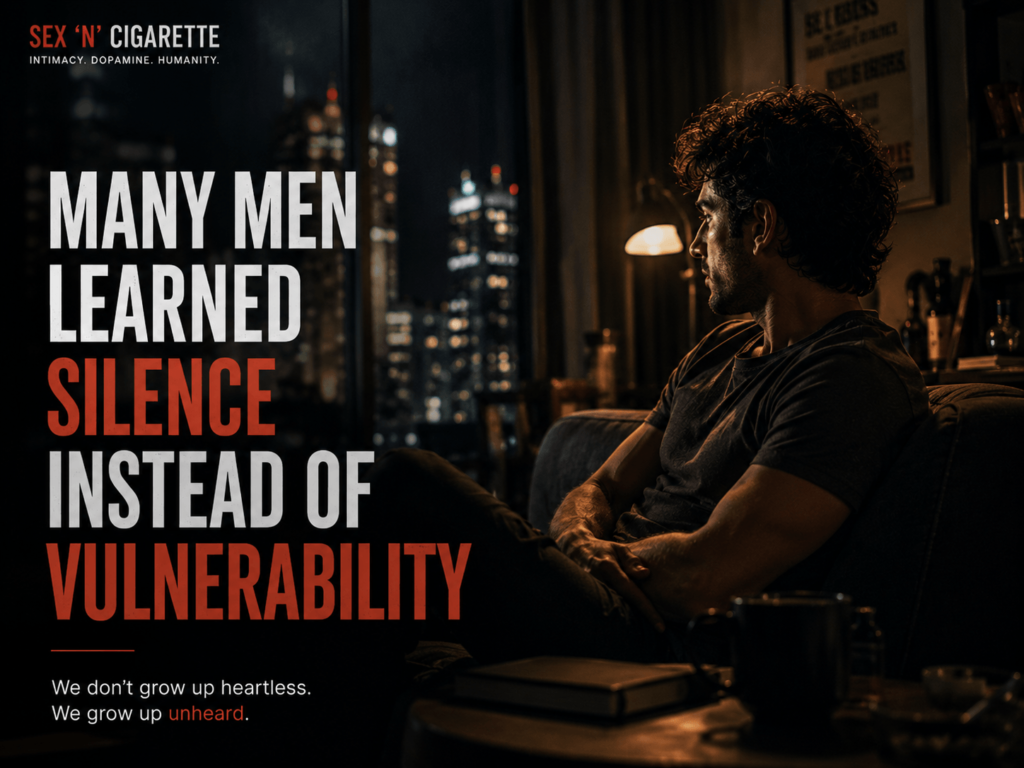
A surprising number of men grow up learning how to suppress themselves long before they ever learn how to understand themselves.
Not always intentionally.
Sometimes it happens quietly, through jokes, family dynamics, school environments, friendships, cinema, or the invisible emotional rules society teaches boys very early without openly explaining them. Boys are often taught how to appear strong, useful, successful, funny, sexually confident, ambitious, emotionally controlled. But very few are genuinely taught how to emotionally process fear, heartbreak, vulnerability, rejection, loneliness, shame, or emotional confusion in healthy ways.
So many men eventually become emotionally fluent in performance while remaining emotionally disconnected from themselves.
And modern life quietly amplifies this problem.
Social media created an environment where people constantly perform identity instead of slowly understanding it. Men especially are trapped between contradictory expectations now. One version of masculinity tells them to dominate emotionally. Another tells them to become emotionally vulnerable instantly. Dating culture rewards confidence while simultaneously demanding emotional intelligence. Internet culture often mocks emotional softness while also criticizing emotional unavailability. Many men quietly feel psychologically confused trying to navigate these conflicting emotional expectations without ever having been taught emotional communication properly in the first place.
And underneath all of this confusion is often a very simple human fear:
the fear of emotional rejection.
Because many men learned early that vulnerability sometimes changes how people perceive them. Boys who cried too openly were mocked. Boys who appeared emotionally sensitive were often called weak. Boys who struggled emotionally were told to “man up” before anyone asked what they were actually feeling underneath their silence. Over time, emotional suppression slowly becomes emotional habit.
And habits eventually become identity.
That’s partly why emotional intimacy becomes difficult for so many modern relationships now. Not because men are emotionless, but because many genuinely struggle translating emotional experiences into language. Sometimes frustration becomes anger because sadness feels inaccessible. Sometimes silence becomes emotional distance because vulnerability feels psychologically unsafe. Sometimes emotional withdrawal is not lack of love at all — it’s lack of emotional vocabulary.
Cinema occasionally revealed this beautifully before internet culture turned masculinity into endless performance again. Some of the most emotionally memorable male characters were not emotionally perfect men. They were emotionally conflicted men. Lonely men. Gentle men hiding behind emotional armor. Even someone like Shah Rukh Khan became emotionally iconic partly because he allowed softness, longing, emotional intensity, heartbreak, and vulnerability to exist inside masculinity without constantly apologizing for it.
People emotionally remember that.
And perhaps this is why many younger men today are quietly beginning to search for healthier emotional models. Not necessarily weaker masculinity. Not performative vulnerability. But emotionally integrated masculinity. The ability to remain emotionally grounded without emotionally disappearing from themselves entirely. The ability to communicate honestly without feeling psychologically ashamed for having emotional depth.
That shift matters deeply, not only for relationships, but for humanity itself.
Because emotionally disconnected people often struggle building emotionally safe relationships with others. But emotionally aware people create safer friendships, healthier intimacy, better communication, deeper connection, and more emotionally secure families over time. Emotional awareness is not the opposite of strength. In many ways, it may actually be one of the most difficult forms of strength modern society still misunderstands.
And maybe healing begins the moment people stop asking men to become emotionally perfect overnight.
Maybe healing begins smaller than that.
A conversation.
A vulnerable sentence.
A friend finally saying what they were actually feeling.
A father speaking more openly to his son.
A partner creating emotional safety instead of emotional judgment.
Because perhaps many men were never truly emotionless.
Perhaps many were simply never taught that emotional honesty could exist without shame.
If this article resonated with you, explore more conversations around emotional intelligence, modern masculinity, intimacy, human connection, and emotional wellness at Sex ‘N’ Cigarette.
Because emotional awareness should never feel like weakness.