
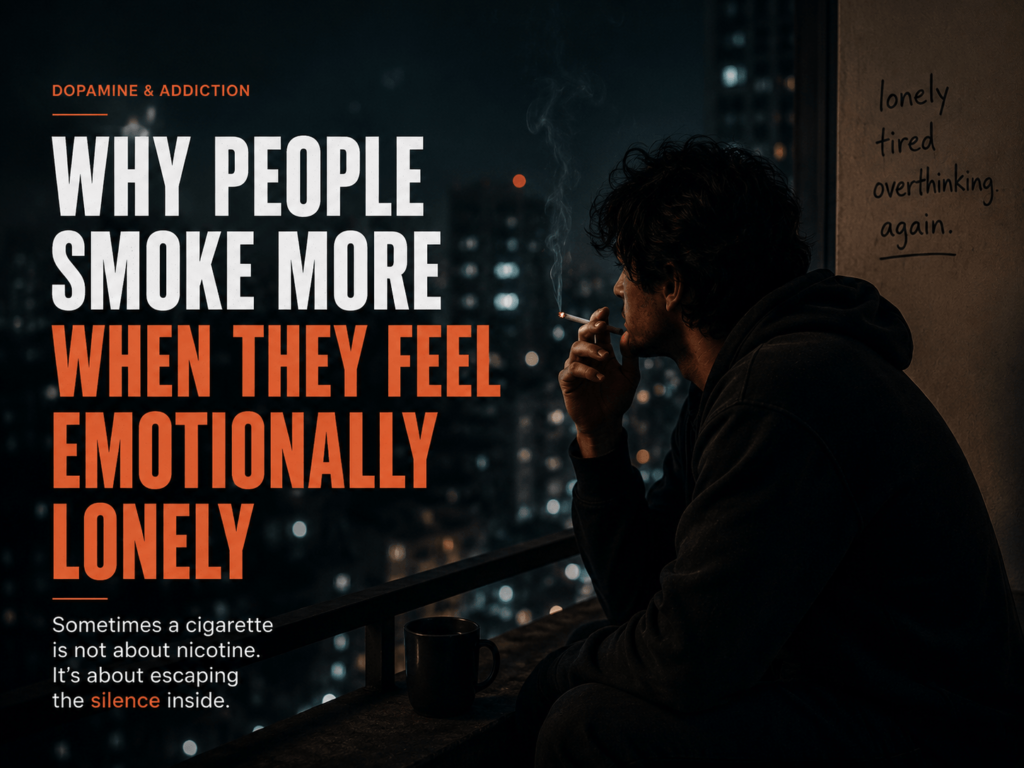
Most people don’t smoke because they’re happy.
They smoke during emotionally quiet moments that feel heavier than usual.
After difficult conversations.
After long nights.
After breakups.
After silence that somehow feels louder than noise itself.
And sometimes, the cigarette is not really about nicotine.
Sometimes it’s about emotional relief.
Modern loneliness doesn’t always look dramatic. Most people still function normally on the outside. They go to work. Reply to messages. Scroll through social media. Laugh occasionally. Stay connected digitally.
But emotionally, many people feel strangely disconnected underneath all of it.
And loneliness has a way of making people search for small rituals that temporarily soften emotional discomfort.
For some people, that ritual becomes smoking.
There’s something psychologically intimate about cigarettes that many non-smokers don’t fully understand.
The pause.
The silence.
The slower breathing.
The temporary separation from everything overwhelming happening internally.
For a few minutes, the world feels quieter.
And emotionally exhausted people begin associating that feeling with comfort.
That’s why cigarettes often feel different late at night.
Night-time removes distraction. The nervous system finally slows down enough to notice unresolved emotions sitting underneath the surface. Thoughts become louder. Loneliness becomes more visible. Emotional emptiness becomes harder to interrupt.
And many people instinctively reach for cigarettes during those moments because smoking creates the illusion of emotional companionship.
Not real connection.
But temporary emotional interruption.
Modern life quietly intensifies this pattern.
People today live in a constant state of stimulation. Notifications. Noise. Algorithms. Endless scrolling. Emotional comparison. Digital overload. The nervous system rarely gets genuine rest anymore.
And emotionally overwhelmed people naturally search for ways to regulate themselves.
Some people binge content.
Some overwork themselves.
Some disappear into relationships.
Some numb themselves through distraction.
Others smoke.
Not because cigarettes solve loneliness.
But because they briefly soften it.
That emotional connection between loneliness and smoking becomes stronger over time because the brain starts linking emotional discomfort with temporary relief.
A stressful moment appears.
A cigarette follows.
The nervous system calms slightly.
Eventually the emotional pattern becomes automatic.
And this is why quitting smoking feels emotionally harder for many people than they expect.
Because people are not always just quitting nicotine.
Sometimes they’re losing:
- a coping ritual
- a pause from overstimulation
- emotional decompression
- a familiar form of comfort
That doesn’t make smoking healthy.
But it does make the behavior psychologically understandable.
Modern society often treats addiction as purely chemical while ignoring how emotional modern life has become underneath the surface.
People are emotionally exhausted.
Emotionally overstimulated.
Emotionally disconnected.
Emotionally lonely.
And emotionally lonely humans have always searched for relief somehow.
The cigarette simply becomes one of many modern coping rituals people unconsciously build around emotional survival.
But eventually, many smokers realize something difficult: the moments they craved cigarettes most intensely were often the moments they actually needed something deeper instead.
Conversation.
Rest.
Connection.
Emotional safety.
Stillness.
Human closeness.
Because loneliness is not really a nicotine problem, it’s a human connection problem. And maybe that’s why smoking feels emotionally tied to loneliness for so many people today. Not because cigarettes replace people. But because emotionally overwhelmed humans will always reach for something that briefly quiets emotional pain — even when they know it cannot fully heal it.
If this article resonated with you, explore more insights on emotional wellness, dopamine psychology, loneliness, intimacy, and modern human behavior at Sex ‘N’ Cigarette.
Because many modern habits are far more emotional than they first appear.
Pingback: Why Cigarettes Still Look Cool In Movies, Even When Everyone Knows They’re Harmful - sexncigarette.com